From scattered spreadsheets to reliable water balances: AI applied to water management in mining. We integrate data, operational context, governance, and analytical automation to support better decisions across water, risk, compliance, and operational performance.
In many operations, water is already too critical to be managed through fragmented sources, fragile manual routines, and water balances that arrive too late to support decision-making. Isolated spreadsheets, scattered field data, partial instrumentation, multiple owners, and low traceability make the process slow and vulnerable.
The result is familiar: difficulty consolidating water balances with confidence, low visibility for leadership, rework during audits, challenges in responding to deviations, and limited ability to turn water data into management routines.
Data Riders solves this problem by connecting data, assets, operational context, governance, and applied AI.
The approach combines information engineering, operational logic, and applied intelligence. Rather than merely aggregating numbers, it contextualizes assets, inflows, outflows, storages, owners, data reliability, and review requirements.
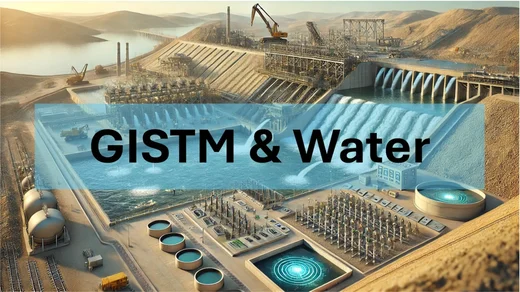
Aligned with standards and best practices such as WAF, ICMM, and interfaces with TSM/GISTM, we transform water data into actionable decision-making routines.
Multi-format ingestion
Spreadsheets, reports, field measurements, sensors, emails, and operational documents.
Structured water context
By asset, flow, process, owner, and criticality.
Standardized water balance
Alignment with WAF, ICMM, and interfaces with TSM/GISTM.
Layered dashboards
Operational, tactical, and executive, turning data into a decision routine.
Evidence trails
Consistency checks and better preparation for audits, reporting, and governance.
Reliable water balance
Less reliance on manual consolidation and higher data reliability.
KPIs with owners
Recirculation, specific consumption, discharge compliance, and availability.
Water asset map
Interconnections and a systemic view of the operation's water network.
Alerts, KRIs, and TARPs
Weather and operational scenarios with triggers and predefined actions.
Audit evidence
Preparation for sustainability, licensing, and executive reporting.
Management routine
Monthly/weekly cycle with metrics, owners, and traceable decisions.
The value is not just "having a pretty dashboard." The value lies in improving how work is done, increasing data reliability, reducing regulatory exposure, and maturing water governance.
With more traceable data, clients gain a stronger foundation for reporting, decision-making, metrics, leadership discussions, stakeholder engagement, and audit processes.
- Greater visibility for operational and executive decision-making.
- Higher quality evidence for audits and reporting.
- Stronger integration across technical, environmental, operational, and management teams.
- Evolution from isolated Excel files to digital twins and advanced automations.
Implementation does not need to start from a perfect scenario. Data Riders operates across different maturity levels, starting from where the client is. In some cases, this means structuring the basics first: criteria, database, information quality, responsibilities, and rituals. In others, it means advancing with automation, sensor integration, digital twin, and more sophisticated AI. An evolutionary and realistic path, not a promise of instant transformation.
AI-Powered Water Management
Full case study on AI-driven water management in mining operations.
AI Innovation for Mining
AI application in mining and sustainability contexts.
Water Congress 2025
Data Riders presents AI agent for intelligent water management.
Water Stewardship
Presentation at a global mining event in Canada.
Tailings is Water Management
GISTM analysis: tailings management as water management.
Launch of GISTM.ai
Why we are breaking away from the legacy compliance model.