
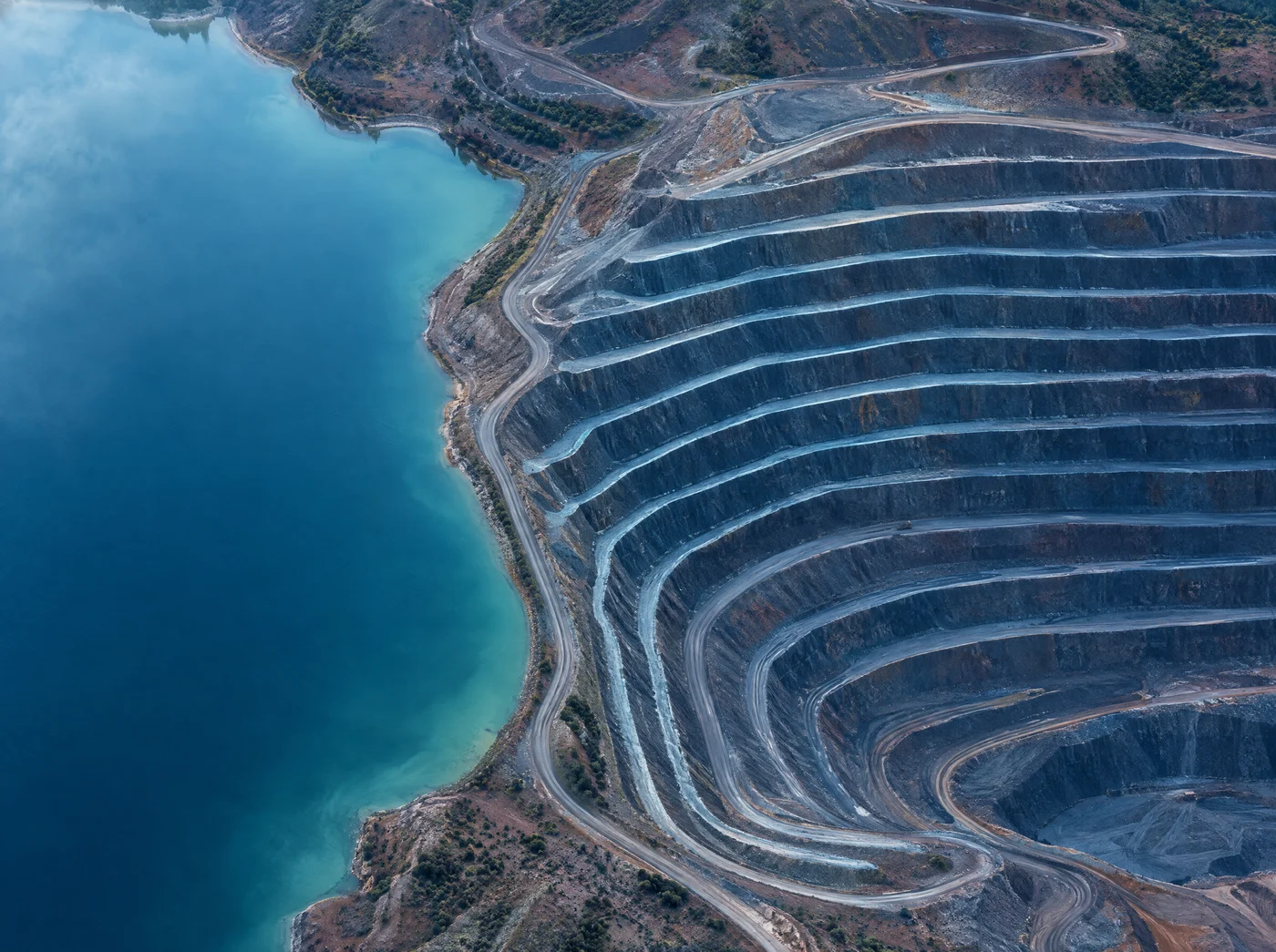
Data and AI in mining
In mining, an incorrect data point turns into non-compliance, a fine, or a risk to life. Global standards (GISTM, TSM, The Copper Mark, CMSI) and ANM resolutions require traceable evidence, not good intentions.
This is where Data Riders built its reputation: tailings governance, water management, geotechnical governance, and audits, now accelerated by AI agents.
Solutions for mining
Shown without client names. What does not exist yet, we build for your process.
 GISTM.aiMaps evidence against the 77 GISTM requirements, indicating gap severity and generating an audit-ready package.77 requisitos
 AquaTwinDigital twin of the mine water balance, featuring document ingestion and monthly balance outputs in Excel.10 asset types
 TSM.aiPre-audit for the 31 indicators across the 9 TSM protocols, on the C to AAA scale, with verbatim evidence.31 indicadores
 TCM AssessorAssesses the 33 criteria of The Copper Mark RRA, providing findings, evidence, and recommendations.33 criteria
 PAEBM.aiBuilds the dam emergency action plan: zoning, scenarios, and communications.95/2022 ANMISO 14001 Pre-AuditorPre-audit of the environmental management system, clause by clause, with compliance findings.10 clausesSiteVisits.aiField inspection copilot: photos, voice, and GPS coordinates convert into reports with traceable evidence.4 standards
 CMSI AssessorPre-audit for the Consolidated Mining Standard Initiative.RIDEData Riders AI advisor for navigating technical standards and documentation.4 etapasCopiloto de Engenharia de OrçamentosReads project drawings, specifications, and spreadsheets to propose cost estimates; the engineer reviews and approves.
Pain points we hear
 GISTM.ai
 PAEBM.ai
 TSM.ai
 TCM Assessor
 CMSI Assessor
 AquaTwin
What do you want to solve?
The platform that comes with it
The most demanding standards in mining
Fernando Damasio and Johan du Toit are on the The Copper Mark Approved Assessors list (Q3 2026 list). We work with GISTM, TSM, CMSI, and ANM resolutions 95/2022 and 175/2024.
Services
15 documented case studies

How Data Riders developed an AI agent for water balance and water governance in mining, connecting assets, flows, people, and data.
Formal multi-criteria analysis process for EARs (Estruturas de Armazenagem de Rejeitos) alternatives, with six stages and alignment with global standards.
How Data Riders designed a KPI hierarchy for water governance in mining, aligned with the Water Accounting Framework (WAF).
Structured GISTM compliance report with prioritized gaps, actionable recommendations, and logic supported by international standards, produced with support from GISTM.ai.
Water governance maturity assessment for mining operators featuring global benchmarking, gap analysis, and improvement strategy across multiple logistics corridors.
Smart diagram representing water flows, assets, and owners, integrated with formal stakeholder and governance mapping.
Living assurance system for tailings: controls, evidence, testing, health index, escalation rules, and monthly executive pack.
How Data Riders developed GISTM.ai: an artificial intelligence platform for continuous compliance with the Global Industry Standard on Tailings Management.
How Data Riders created a methodology to classify water balance data reliability and guide instrumentation investments.
Muiraquitãna: a territorial AI agent for Baixo Tapajós, built with MuCA (Museu de Cultura Amazônica). Six chat modes with voice and visual elements, public launch in April 2026.
How Data Riders optimized functional structures for the tailings management system and geotechnical management system for integrated governance in mining.
Water management pilot in a mining complex: process mapping, water balance, KPIs, monitoring plan, and preparation for an AI agent.
How Data Riders structured the corporate geotechnical department redesign at a major mining company with 5 phases, 12 deliverables, and a focus on decision-making and accountability.
High-fidelity 3D simulation of terrain, infrastructure, and routes to model autonomous trucks in an open-pit mine: route optimization, safety in critical areas, and material haulage efficiency.
How to connect operations, international ESG credibility, and community legitimacy into a single value case for integrated water resources management in mining.
Readings
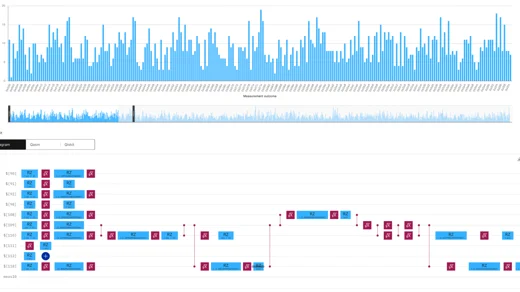
Experiment with QAOA in iron ore blending: the IBM QPU matched brute force (US$ 221/t) while the simulator stalled at US$ 309/t.
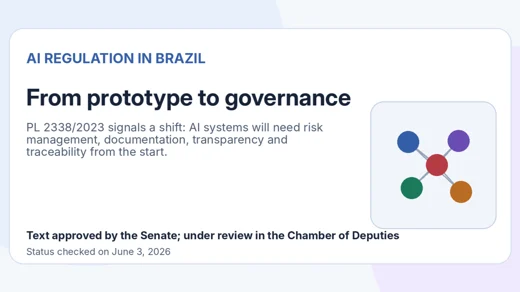
Understand PL 2338/2023, which regulates AI in Brazil, and what technology companies should do now: risk, documentation, LGPD, contracts, and penalties.
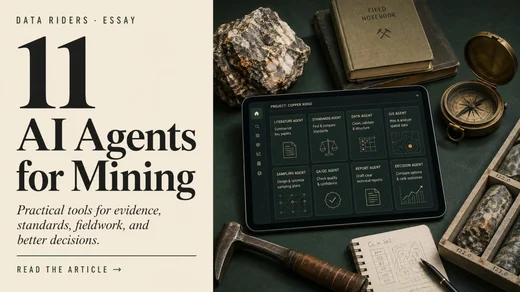
Explore 11 Data Riders AI agents for mining: water, tailings, emergency, field, TSM, Copper Mark, CMSI, ISO 14001, territory, and technical navigation.

Exploration, planning, maintenance, logistics, and safety: see where quantum computing can deliver real advantage in mining and how to prepare now.
Mining on the Moon is an extreme laboratory for efficiency, automation, electrification, and traceability. See what this field teaches terrestrial mining.
How specialized agents can accelerate evidence review, traceability, and GISTM audit readiness without replacing human technical decision-making.
From the scramble for evidence to continuous readiness: understand why GISTM.ai was created and how it repositions tailings compliance.
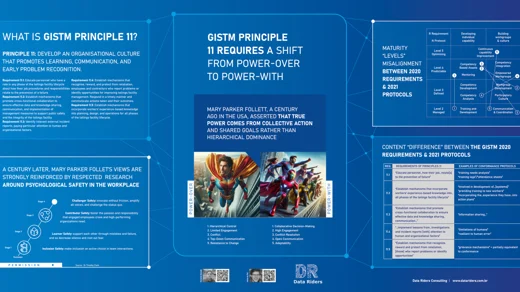
Why GISTM Principle 11 should not be delegated to HR and how leadership, learning, and psychological safety transform tailings management.
A 30-minute conversation
Only your name is required, along with a way to reach you. The rest is optional.